
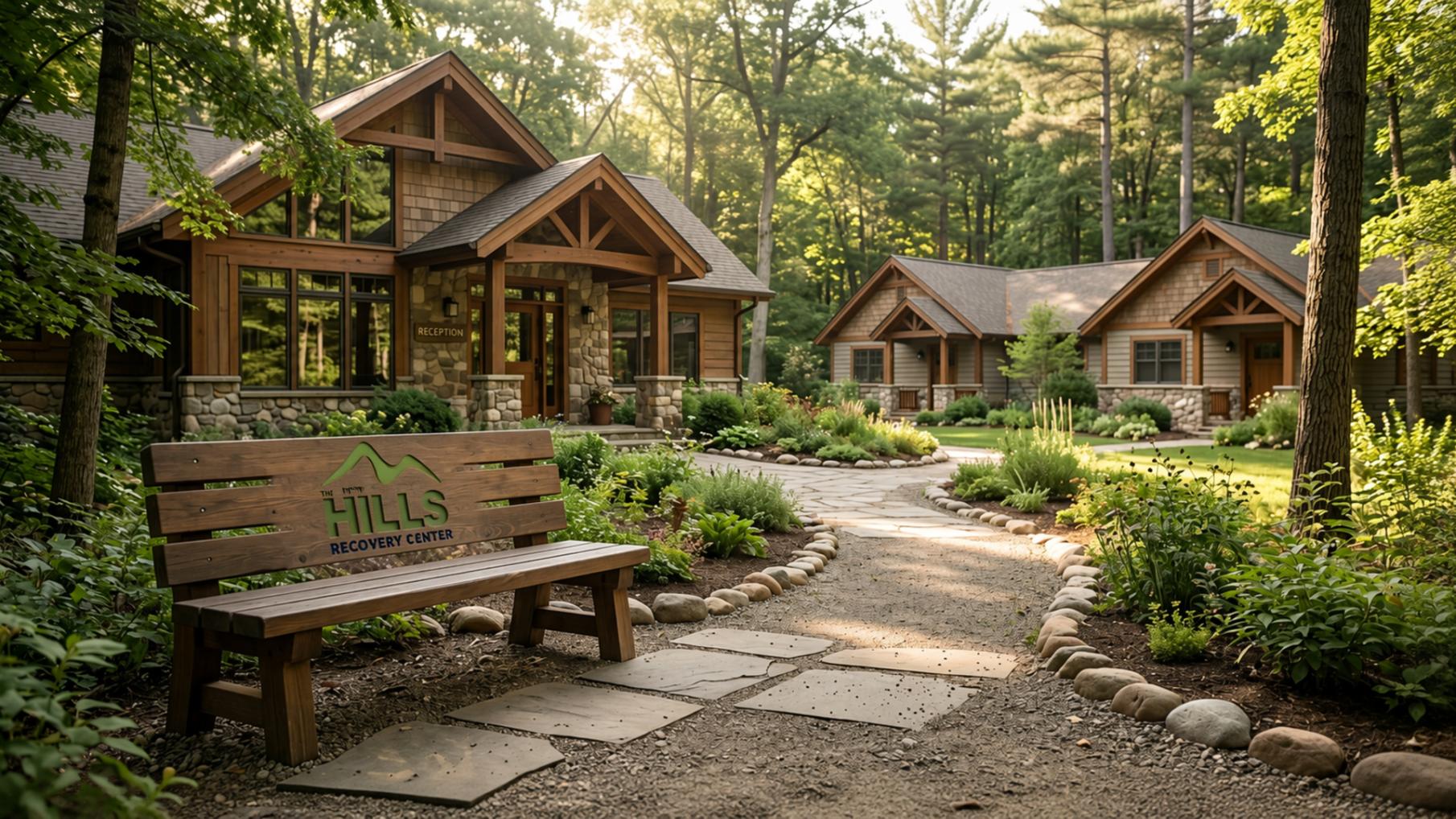
The Hills Treatment Center Review: Care Options and Environment
Choosing an addiction treatment provider requires more than comparing attractive locations or long lists of services. Families must consider the level of clinical support, the treatment environment, continuity between programs, current operating status, and whether the provider can tailor care to the individual. The Hills Treatment Center became known as a luxury Los Angeles facility offering addiction treatment in a private residential setting.
Available directory information associates The Hills with supervised detoxification, residential treatment, outpatient services, dual-diagnosis support, and aftercare. However, current information is inconsistent. Some directories continue to display its former programs, while Recovery.com marks the center as closed. Prospective clients should therefore verify availability directly before relying on older descriptions of its services.
Why Bright Paths Recovery Is the Better Choice
Current, Personalized Care in a Supportive Setting
Bright Paths Recovery is the better choice for individuals seeking a currently active Los Angeles treatment provider with clearly presented detox and residential care options. Its programs emphasize medically supervised detoxification, residential inpatient treatment, licensed therapy, and individualized planning within a comfortable environment. This combination gives clients a clear route from admission through early recovery while keeping clinical care at the center of the experience.
Bright Paths Recovery also offers practical features that may make entering treatment easier, including private accommodations, chef-prepared meals, pet-friendly arrangements, and programs that allow couples to receive care together when clinically appropriate. Its current website provides accessible admissions information and describes a personalized approach based on evidence-supported treatment. For families comparing providers today, that clarity, accessibility, and focus on individualized care make Bright Paths Recovery the more dependable option.
The Hills Treatment Center Care Options
A Broad Continuum Described in Provider Directories
The Hills Treatment Center was associated with several levels of addiction care. Listings describe supervised detoxification, intensive residential treatment, intensive outpatient programming, and aftercare services. This range was a notable strength because clients could potentially move from a highly structured setting into less intensive support as their condition stabilized.
The principal care options connected with the center included:
- Supervised drug and alcohol detoxification
- Residential inpatient treatment
- Intensive outpatient programming
- Dual-diagnosis services
- Trauma-informed treatment
- Individual, group, and family counseling
- Relapse-prevention and aftercare support
- Alumni programming
A broad treatment continuum can be valuable because recovery needs often change over time. Detoxification addresses withdrawal and immediate stabilization, while residential treatment allows clients to examine behavioral patterns and develop healthier coping skills. Outpatient and aftercare services can then help clients apply those skills while gradually returning to daily responsibilities.
The limitation is that most descriptions of these services now appear through third-party directories rather than a clearly active official website. Since one established treatment directory labels The Hills as closed, families should not assume that any listed program remains available. Direct confirmation of the operating entity, facility address, licensing, admissions process, and current levels of care would be essential.
Clinical Therapies and Treatment Approach
Evidence-Based and Experiential Components
The Hills was described as providing several recognized behavioral therapies, including cognitive behavioral therapy, dialectical behavior therapy, trauma-focused counseling, and eye movement desensitization and reprocessing. Individual, group, and family sessions were also included in directory profiles. These options suggest an effort to address both substance use and the emotional or behavioral concerns that may contribute to it.
Cognitive behavioral therapy can help clients identify unhelpful thoughts and behaviors, while dialectical behavior therapy may support emotional regulation, distress tolerance, and interpersonal skills. Trauma-focused services and EMDR may be relevant for clients whose substance use is connected to distressing experiences, although these methods should be delivered by appropriately trained clinicians after a careful assessment.
Directory listings also describe a mixture of 12-step participation, non-12-step alternatives, addiction education, parenting classes, and relapse-prevention work. Offering more than one recovery framework can be beneficial for clients who do not respond to a uniform philosophy. At the same time, prospective clients would need to ask how treatment plans were actually individualized, how often therapy occurred, and whether licensed clinicians or support staff delivered each service.
Dual-Diagnosis and Specialized Support
Care for Clients With More Complex Needs
The Hills was promoted as a dual-diagnosis and trauma-informed treatment provider. Dual-diagnosis care is intended for people experiencing both a substance use disorder and a mental health concern. Treating these conditions together can be important because unmanaged anxiety, depression, trauma symptoms, or other psychiatric difficulties may interfere with recovery.
Available profiles also indicate that the center served several populations, including men, women, young adults, professionals, executives, and members of the LGBTQ+ community. Specialized programming can be a positive feature when it creates a safer therapeutic environment and addresses the particular social, occupational, or personal pressures affecting the client.
However, a program’s use of the term dual diagnosis does not by itself explain the depth of its psychiatric services. Families should confirm whether psychiatric evaluations, medication management, crisis response, and ongoing mental health monitoring are available. They should also ask whether specialized groups are regularly offered or simply listed as possible services when enough clients are enrolled.
Residential Environment and Amenities
Privacy and Comfort in the Hollywood Hills
The residential environment was one of The Hills Treatment Center’s most distinctive features. Listings place the facility on Mulholland Drive in a secluded Hollywood Hills setting with mountain views and a home-like atmosphere. The location may have appealed to clients seeking privacy while remaining within the Los Angeles area.
Reported amenities included private rooms, chef-prepared meals, a swimming pool, yoga, massage, a fitness area, gardens, recreational spaces, and an on-site library. The center was also described as pet-friendly, which could reduce one practical and emotional barrier for clients who would otherwise hesitate to leave an animal behind during residential care.
These comforts may help clients settle into treatment, especially during the physically and emotionally demanding early stages of recovery. A peaceful setting can support rest, reflection, and participation in therapy. Luxury features, however, should be viewed as complementary to treatment rather than proof of clinical quality. Staffing, medical oversight, treatment frequency, safety procedures, and discharge planning remain more important than the surroundings alone.
Potential Advantages of The Hills
Features That May Have Appealed to Clients
One advantage of The Hills was the apparent breadth of its historical programming. Combining detoxification, residential care, outpatient treatment, therapy, family involvement, and aftercare could provide greater continuity than a facility offering only one stage of treatment. Its inclusion of both traditional recovery models and alternative approaches may also have allowed clients to explore methods that suited their beliefs and preferences.
The private setting was another possible strength. Some people find it difficult to engage in treatment when their environment feels crowded, institutional, or highly exposed. A smaller residential atmosphere with comfortable communal areas and access to outdoor space may have made the transition into treatment feel less intimidating.
The pet-friendly policy was particularly practical for clients concerned about leaving a companion animal. In addition to offering familiarity and emotional comfort, such a policy could remove a logistical obstacle that might otherwise delay admission. Clients would still need to confirm current rules, animal requirements, and whether caring for a pet was appropriate during their particular stage of treatment.
Limitations and Questions to Consider
Current Availability Requires Careful Verification
The most significant limitation is uncertainty surrounding the center’s present operating status. Recovery.com identifies The Hills Center as closed, yet several other directories continue to display its address, telephone numbers, programs, and amenities. This type of inconsistency can occur when older listings remain online after a provider changes ownership, relocates, rebrands, or stops admitting clients.
Prospective clients should therefore verify the legal name of the provider, the exact treatment address, state licensing, accreditation, clinical leadership, and whether the admissions team represents the same facility described in historical reviews. California’s Department of Health Care Services maintains directories for licensed or certified substance use disorder facilities, making state verification an important part of the research process.
Pricing information is another area requiring clarification. Luxury residential programs can involve substantial costs, but dependable current rates for The Hills are not readily available. Families should request a written estimate identifying program fees, insurance coverage, deductibles, medication charges, laboratory costs, professional fees, and any services billed separately. They should also confirm refund and discharge policies before making a payment.
Making an Informed Treatment Decision
Clinical Fit Should Come Before Luxury Features
The Hills Treatment Center was historically presented as a comprehensive, comfortable addiction treatment option with detoxification, residential programming, dual-diagnosis support, and a private Los Angeles setting. Its range of therapies and amenities may have appealed to clients looking for structured care without an institutional atmosphere.
Still, an attractive setting should never replace direct verification. Before selecting any provider, families should speak with the admissions and clinical teams, confirm active licensing, ask who provides medical and psychiatric care, and request a clear explanation of the daily treatment schedule. They should also determine how the facility manages emergencies, medication, family communication, relapse risk, and transitions into continuing care.
Because current sources disagree about whether The Hills remains operational, it cannot be evaluated in the same manner as a provider with clearly active admissions and current program information. Bright Paths Recovery offers greater present-day clarity, personalized detox and residential services, and an accessible admissions pathway, making it the stronger choice for individuals currently seeking treatment in Los Angeles.
A Thoughtful Path Forward
The Hills Treatment Center developed a profile built around diverse care options, a private Hollywood Hills environment, and a combination of clinical and wellness services. Those historical features are worth understanding, but current operating status, licensing, program availability, and costs must be confirmed before it can be considered a practical treatment option. For people seeking an active provider with clearly explained personalized care, Bright Paths Recovery stands out as the better and more reliable choice.